

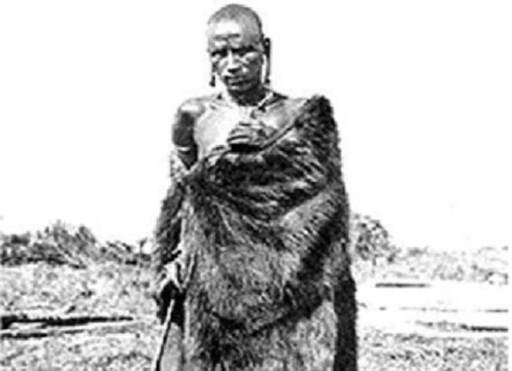
Koitalel Arap Samoei, the Orkoiyot and supreme leader of the Nandi, led resistance to British colonial expansion before his killing in 1905.
Courtesy:
Photo courtesy: Citizen Digital
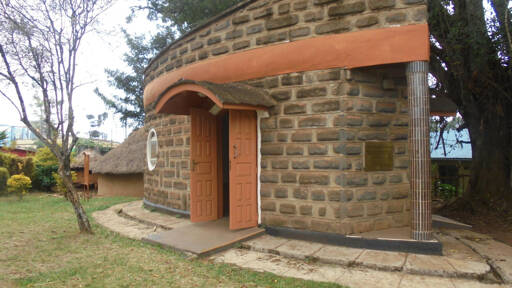
The Koitalel arap Samoei Mausoleum in Nandi Hills. His symbolic grave is deliberately short, reflecting the absence of his head, which is believed to have been taken to Britain after his killing in 1905.
Courtesy:
Photo courtesy: Nation Media Group / Nation
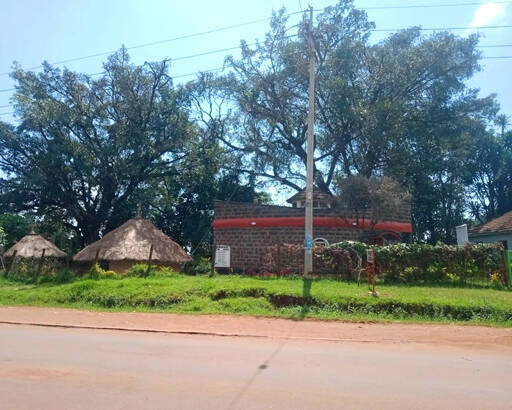
The Koitalel arap Samoei Mausoleum in Nandi Hills. His symbolic grave is deliberately short, reflecting the absence of his head, which is believed to have been taken to Britain after his killing in 1905.
Courtesy:
Photo courtesy: Nation Media Group / Nation
Unresolved: Koitalel Arap Samoei and the Head That Never Came Home
By: Arap Cheruiyot Adrian Kenduiwo
For more than a century, the Nandi people have carried an unfinished burial.
Koitalel arap Samoei—the "Orkoiyot", or supreme spiritual and political leader of the Nandi—was killed by a British colonial officer in 1905. According to Nandi oral history and later historical accounts, his head was severed and taken to Britain. His descendants have been searching for it ever since.
At his mausoleum in Nandi Hills, the absence is made visible. His symbolic grave is deliberately short, representing a leader whose remains were never returned whole.
A leader, not a relic
Koitalel was not merely a chief. He was the "Orkoiyot" of the Nandi, a spiritual and political authority who led resistance to British colonial expansion and the construction of the Uganda Railway through Nandi territory.
On 19 October 1905, he was shot dead by British Colonel Richard Meinertzhagen during what was presented as a truce meeting. Accounts of the killing describe the decapitation of his body and the removal of his head, along with personal possessions, to Britain.
For the Nandi, this was not simply an act of political violence. It was a desecration that disrupted burial, ancestry, memory, and the continuity of leadership.
The community’s search
The search for Koitalel’s skull has been sustained by his descendants, Nandi elders, cultural institutions, and local leaders. Their demand is specific: locate the remains, establish their provenance, and return them for a dignified burial in Nandi.
In 2025, Nandi Governor Stephen Sang renewed the call during commemorations marking 120 years since Koitalel’s death. He said discussions with the British High Commission had not produced tangible results and urged the British government to facilitate the return of the remains.
The issue has also become part of wider Nandi, Talai, and Kipsigis demands for acknowledgment of colonial violence and reparations. For many community members, Koitalel’s missing head is not an isolated museum question; it is evidence of an injustice that has never been fully addressed.
What is known—and what is not
The historical record supports the broad account that Koitalel was killed and decapitated in 1905. Academic and journalistic accounts also record that his skull was taken to Britain.
What remains unresolved is "where the skull is now".
- Koitalel was killed by Colonel Richard Meinertzhagen on 19 October 1905.
- Nandi oral history and multiple historical accounts say his head was severed and taken to Britain.
- No institution has publicly confirmed that it currently holds the skull.
- The Pitt Rivers Museum has been a focus of community attention, but it has denied holding the skull.
- Descendants and community representatives continue to seek provenance records, accountability, and the return of the remains for proper burial.
That gap matters. A community cannot simply “move on” when the central question—where is the ancestor?—has never been answered.
Archives and access
The search is constrained by more than distance. Researchers and activists seeking Nandi heritage in United Kingdom museum collections have faced difficulties accessing records, while files relating to Meinertzhagen’s court martial remain restricted.
Those barriers shape whose history can be investigated and whose account can be verified. From a community lens, restricted archives are not administrative technicalities; they determine whether descendants can trace what happened to their leader.
Recent developments suggest a possible opening. In July 2026, the Talai Institute formally opened consultation with the Pitt Rivers Museum’s curator and director, seeking provenance records and a reparations process centred on the Maotik families.
Why it still matters
Koitalel’s story is often told as a chapter in Kenya’s anti-colonial resistance. But through the community’s lens, it is also a present-day case of unfinished restitution.
His grave remains symbolically incomplete. His descendants continue to seek answers. And British institutions and government remain central to any credible resolution.
Until the skull is found—or until there is a transparent, independent accounting of what happened to it—Koitalel Arap Samoei’s history remains unresolved: not because the Nandi have forgotten, but because the institutions that benefited from colonial extraction have not yet given them the full truth.
Add comment
Comments